
Soil, plants, animals, and humans—
everything is connected

Illustration
Our Mission
Digitalization of Ecosystems
Hypothesis Building through Data Science
Hypothesis Testing in the Laboratory
Reconstruction of Knowledge in Digital Space
Ecosystem Engineering

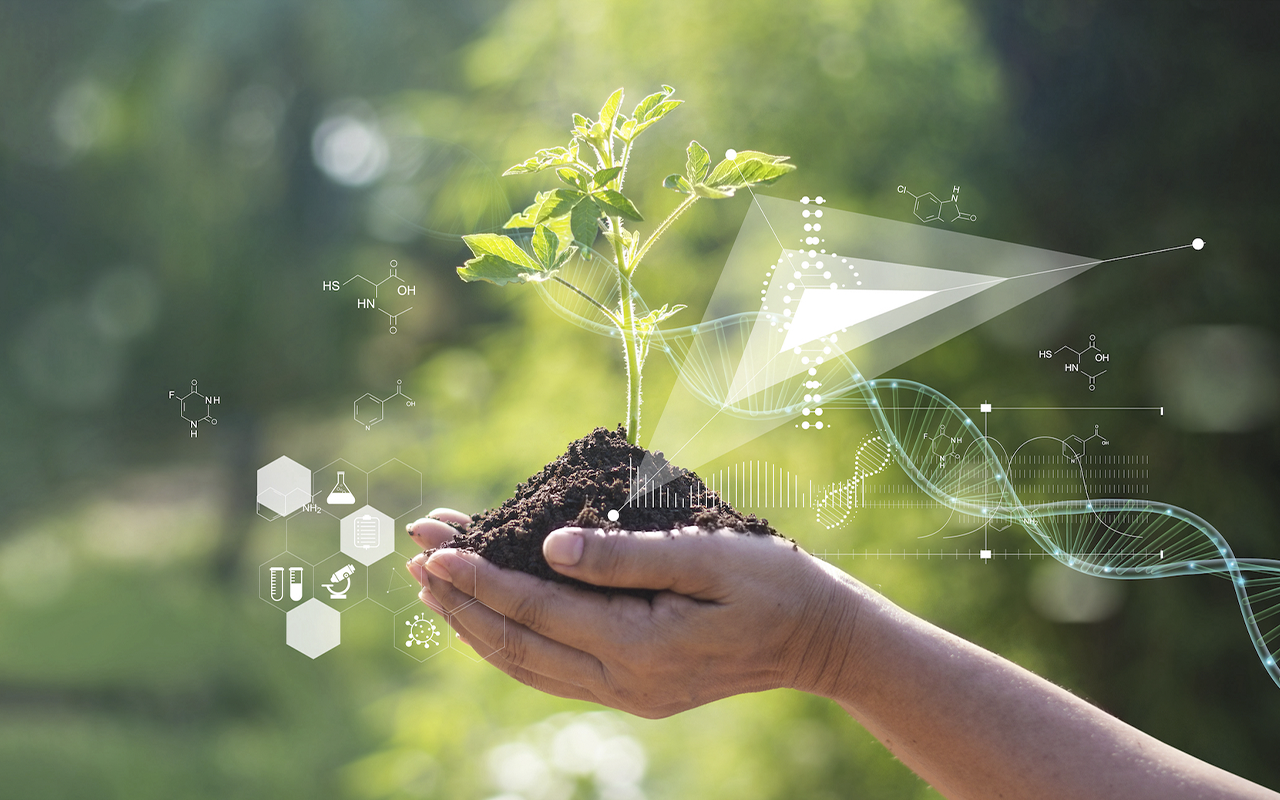
No living organism exists alone. All life forms, including microorganisms, coexist as “holobionts.” By viewing life through the lens of holobionts and exploring ways for humans to live resiliently together with nature, we aim to open up new possibilities for the future.

Multi-omics analysis to decipher
soil–plant–microbe complex systems

    Agricultural fields and natural environments can be viewed as “complex systems” where soil, plants, and microorganisms tightly interact. In this project, we directly sample from real field sites and perform multi-omics analyses targeting DNA (genomics), RNA (transcriptomics), metabolites (metabolomics), and more. This enables us to uncover the real-world relationships and mechanisms among soil, plants, and microbes that are difficult to capture in conventional laboratory experiments.
Multi-omics analysis

High-precision simulation development for
agricultural digital twins using real-world data

    We are developing an “agricultural digital twin” that reproduces and predicts agricultural fields in digital space using real-world data such as weather, soil conditions, and crop growth. This framework supports data-driven decision-making for yield and quality prediction, greenhouse gas emission assessment, and pest and disease risk forecasting. By integrating process-based models that capture plant growth mechanisms with machine learning models that learn from big data, we aim to achieve more accurate simulations.
Agricultural digital twin

Soil microbiome research to decode
the hidden record of Earth’s history

    Soil covers much of the Earth’s surface and serves as a cradle of life for countless microorganisms. In this research, we explore evidence that the DNA of soil microbes preserves a “memory” of Earth’s environmental history. The diverse microbial DNA in soil contains traces of local climate, ecosystems, and environmental change—like a coded chronicle of the planet. By decoding this “memory of the Earth,” we aim to provide a new perspective on the long-term dynamics and mechanisms of global environmental change.
Microbiome

Efficient discovery of beneficial microbes
using microdroplet technology

    Soil harbors over a million microbial species, yet more than 99% of them have never been cultured and remain unexplored. Many of these unknown microbes likely possess functions that could support sustainable agriculture. In this project, we use microdroplet technology to culture and analyze over one million individual microbes in tiny droplets within a single tube, enabling ultra–high-throughput screening that was difficult with conventional methods. This accelerates the discovery of novel microbes and their functions, opening up new possibilities for agricultural technologies and environmental conservation.
Microdroplet technology

Resource development and applications of
plant symbiotic and extremophile microorganisms

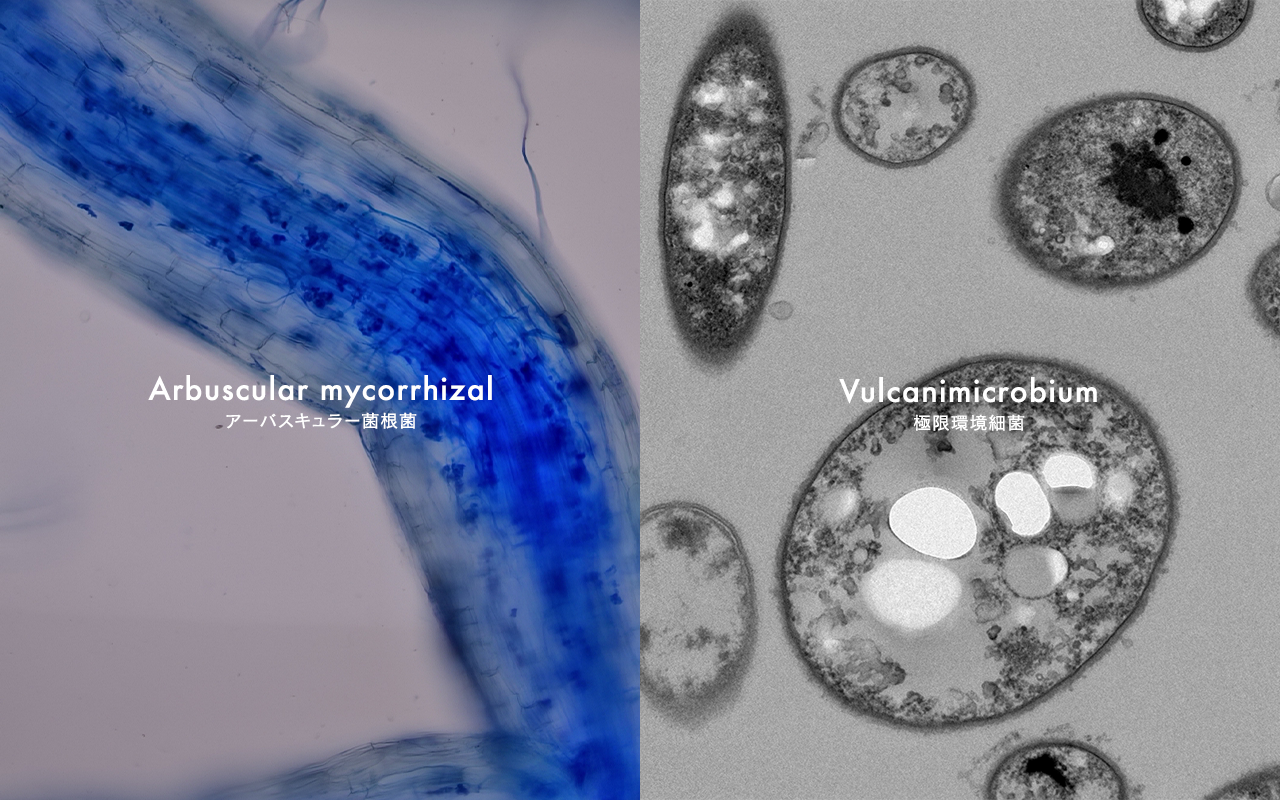
    As a strategy to reduce dependence on chemical fertilizers and pesticides, we are working on the resource development of plant symbiotic microbes and microorganisms living in extreme environments. Symbiotic microbes, such as arbuscular mycorrhizal (AM) fungi and rhizobia, enhance plant nutrient uptake and contribute to sustainable agriculture. Microorganisms isolated from harsh environments, such as volcanoes and deserts, may possess unique metabolic pathways and CO₂-fixation abilities, making them promising candidates for next-generation “bio-manufacturing.” By exploring diverse microorganisms, we aim to drive innovation in agriculture and life sciences from Japan to the world.
Resource development
news room

Research Achievements

Publications, books, patents,
and talks by the team

Careers

Recruitment and support for
students and early-career researchers

our team

Self-directed learning and open science


Through the use of R2DMS and regular journal clubs, we foster an environment where researchers can learn autonomously and share the latest knowledge, aiming for sustainable development of research activities.

Open research culture driven by dialogue


By leveraging digital tools and a free-address workspace, we aim to create transparent communication and a rich environment for dialogue.

Listening to strengthen the team


By actively listening to the opinions and concerns of team members and ensuring transparency, we aim to create an environment where researchers can focus on their work and where talented people naturally gather.

Contact Form

Fields marked with (*) are required.
Please do not use half-width katakana characters.
Before submitting, please carefully check for any typos in your email address.
The information you provide will be used only to respond to your inquiry.
It will not be used for any other purpose.
For details on how we handle personal information,
please see our Privacy Policy .

This contact form is mainly intended for the following inquiries:

Questions about our research.
Media and interview requests.
For recruitment, please visit the Careers page .
We support the career development of postdoctoral researchers and students.
Other questions or comments related to our research.

contact form

Loading
Your message has been sent successfully. Thank you!